Why Maine's Spring Thaw Is Hard on Sump Pumps
Every year around late March and April, the ground across greater Portland goes through the same transition. Frost that has locked the soil for months begins to release, and the water stored in the top layers has nowhere to go but down and sideways. Add several inches of rain on top of melting snowpack, and your sump pump suddenly becomes the hardest-working appliance in the house. It may run almost continuously for days, cycling on and off as the water table rises.
The problem is that most sump pumps sit idle from November to March. A pump that has not run in months can seize, clog, or fail within the first few hours of heavy spring use, and that is exactly when you can least afford it. Spring thaw flooding is the single most common reason basements in this region take on water. A short maintenance routine in late winter or early spring, before the melt really begins, is the cheapest insurance you can buy against a flooded basement.
Start With the Sump Pit: The Step Most Homeowners Skip
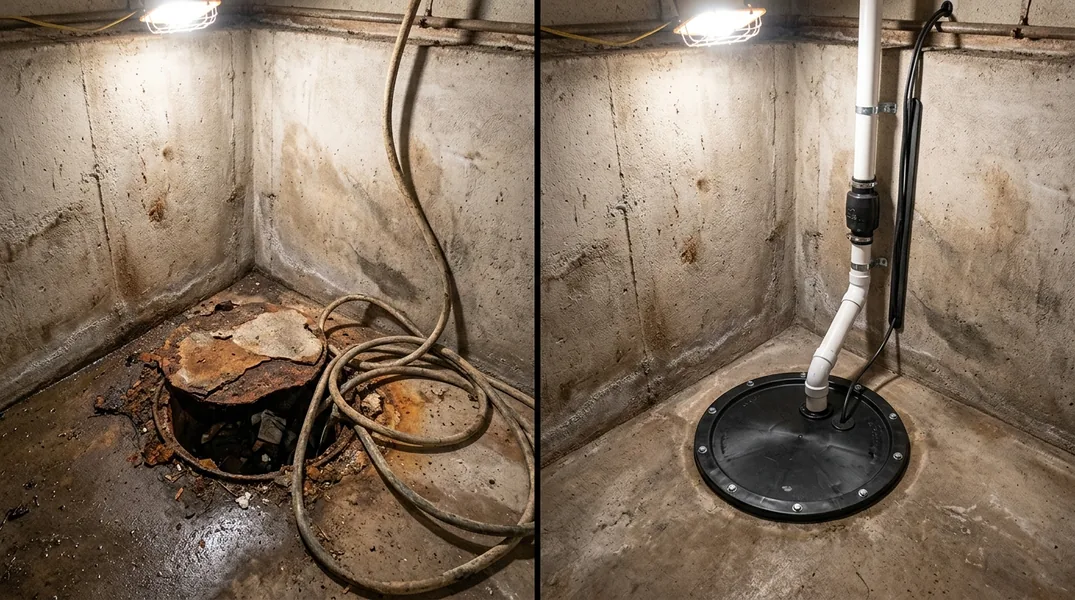
Sump pit care is the foundation of any maintenance routine, and it is also the step people overlook most often. Begin by unplugging the pump and lifting the lid. Shine a flashlight into the pit and look for silt, sand, gravel, or small debris that has settled at the bottom. Over time, sediment builds up and can jam the float or clog the intake, which means the pump runs but moves little or no water. If the pit is more than a couple of inches deep in sludge, scoop it out, rinse the pit, and set the pump back on a clean, level surface.
While you are in there, check that the pit itself is intact and that the liner is not cracked. Confirm the float moves freely through its full range and does not rub against the pit wall or a discharge pipe. A float that sticks in the off position is one of the most common causes of a pump that simply never turns on during a storm. If your pit is undersized or fills faster than the pump can clear it, that is a sign you may need a larger basin or a more robust system, and it is worth discussing with a professional before the spring rush.
Test the Pump, the Float, and the Sump Pump Check Valve
Once the pit is clean, plug the pump back in and test it properly. The simplest method is to pour a bucket or two of water into the pit until the float rises and the pump kicks on. Watch how quickly it clears the water and listen to the motor. It should start promptly, run smoothly, and shut off cleanly when the water level drops. Grinding, rattling, or a motor that hums without pumping is a warning sign that the pump is on its way out and should be replaced before the thaw, not during it.
Next, inspect the Basement Waterproofing components connected to the discharge line, especially the sump pump check valve. This small fitting prevents water from flowing back into the pit after the pump shuts off. If the valve is stuck open, water drains back in and the pump short-cycles endlessly, which burns out the motor fast. If it is stuck closed, the pump runs but cannot push water out at all. Make sure the discharge line slopes away from the house, is clear of ice and debris, and does not terminate too close to the foundation, where it would simply send water back toward the basement.
Battery Backup Sump Pump: Your Safety Net When the Power Fails
Spring storms in Maine frequently knock out power, and a sump pump without electricity is just a plastic bucket in a hole. That is why a battery backup sump pump matters so much here. During a heavy thaw, the worst flooding often happens at night or during a storm, exactly when the grid is most likely to fail. A backup system runs on a charged battery and keeps pumping when the primary unit cannot. If you already have one, test it now: unplug the main pump, trigger the backup, and confirm it moves water. Then check the battery age and charge level, because a battery that sat all winter may not hold up for hours of continuous use.
If you do not have a backup, this is the season to add one. A backup pump is far less expensive than restoring a finished basement, and it buys you time until power returns or you can call for help. While you are checking the system, look at the overall drainage around the foundation. If water pools against the house or the gutters dump right at the base, no pump can keep up forever. Solutions like an Interior Drain Tile System or Exterior Basement Waterproofing can reduce how much water ever reaches the pit, and Foundation Waterproofing protects the structure itself from the constant moisture.
Sump Pump Maintenance Near Me: When to Call a Pro
Some maintenance is genuinely DIY, but not everything. If you find a cracked pit, a pump that trips the breaker, a discharge line you cannot route properly, or signs of water intrusion along the basement walls, it is time to bring in someone who does this every day. Homeowners in South Portland, Westbrook, and Falmouth face the same thaw conditions, and a professional inspection can catch a failing pump or a saturated foundation before it becomes a flooded basement. If you are searching for sump pump maintenance near me, a local technician can test the whole system, from the pit to the discharge point, and tell you honestly what needs attention.
Portland Waterproofing serves the greater Portland area and can inspect your sump system, recommend a backup, and address any underlying drainage issues before the melt arrives. Call (207) 517-2867 to schedule a visit, or request a free estimate online. If you want to understand what a full system might involve, you can review our pricing page. A little preparation now is far easier than pumping out a basement in April.
Looking for a professional basement waterproofing contractor in Portland? Portland Waterproofing responds fast for all your basement waterproofing needs.
Get a Free QuoteOur services: Basement Waterproofing · Interior Drain Tile System · Exterior Basement Waterproofing