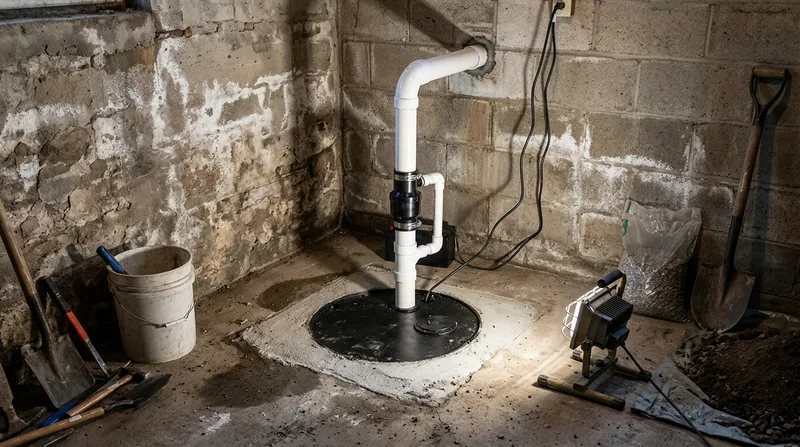




Portland sits on a thick layer of Presumpscot marine clay, a fine gray silt left behind when the sea covered this ground after the glaciers, and that clay does not drain fast. In the 1880s-1920s wood-frame and brick houses on Munjoy Hill, Parkside, the West End and Deering Highlands, water rises through granite, fieldstone and early brick foundations and pools at the lowest corner of the cellar. In the 1930s-1960s Cape Cods and ranches in Bayside, Riverton and Westbrook, it seeps through block walls and floods partly finished basements. In the newer poured full basements in the Gorham and Windham subdivisions, it arrives fast during snowmelt and nor'easter rain. Sump Pump Installation & Replacement in Portland is the work that keeps that water out of the basement once it reaches the pit, and it is the single most common call we get after a wet spring. If your pump is undersized, sitting in a dirt pit or discharging into the wrong place, we can fix it. Start with a free basement inspection and we will tell you exactly what is failing.
Why a Working Sump Pump Matters in Portland's Clay and Stone Cellars
Hydrostatic pressure is the real enemy here. Presumpscot marine clay holds water against the foundation for days after a storm, and the water table in low spots like Bayside and the flats near the waterfront stays high well into May. In old stone and brick cellars, that pressure pushes water through mortar joints and open cracks and it collects at the lowest corner, which is exactly where a sump basin belongs. A pump that is too small, clogged or unpowered turns a damp corner into a flooded basement in a single nor'easter.
- The pump must be sized to the actual inflow, not to whatever was on sale at the hardware store.
- The basin has to be sealed and set below the slab so water reaches it instead of spreading across the floor.
- A check valve keeps water from draining back into the pit after each cycle.
- The discharge line must exit above grade and away from the foundation, not into the clay beside the wall.
- Freeze-thaw cycles mean the discharge route has to drain fully or it will ice up and burn out the pump.
When those five pieces are right, the pump handles snowmelt and spring rain without constant cycling or premature failure.
Key info: A West End stone cellar we inspected last April had a 1/3 HP pump in an open dirt pit with no check valve. The pump ran continuously for three days during snowmelt and seized. A sealed basin, a correctly sized 1/2 HP pump and a freeze-protected discharge line solved it without touching the walls.
For the official word on plumbing and discharge requirements, check the City of Portland building and plumbing pages before you schedule work.
How We Install or Replace a Sump Pump in Portland Homes
We start by finding where the water actually enters and where it collects. On a Cape Cod in Riverton with a block wall, that might be a low corner near the footing. On a Deering Highlands house with a fieldstone foundation, it is usually the deepest point of the cellar floor. We measure inflow during a wet period when possible, then size the pump and basin to match instead of guessing.
- We inspect the basement, the existing pit and the discharge route, and we check for efflorescence and wall seepage that point to hydrostatic pressure.
- We cut and set a sealed sump basin at the low point, tied into the interior perimeter drain where one exists.
- We install a correctly sized pump, a check valve and a sealed lid to keep debris and odors out.
- We route the discharge line above grade, slope it to drain fully and extend it well away from the foundation.
- We test the system through a full cycle and show you how to check it before each spring.
If the pit is dry but the walls weep, the pump is not the whole answer, and we will say so. That is when an interior drain tile system is the better fix, because it collects water at the wall and footing before it reaches the floor.
Key info: In a 1990s Gorham subdivision, the original builder pump sat in a shallow pit with a discharge hose that ran three feet out and dumped into the clay. Every thaw, that water came right back. We replaced the pump, added a check valve and ran a solid discharge line to a dry well 12 feet from the wall.
Sump Pump Approaches We Use in Portland
Not every basement needs the same setup. The right approach depends on the foundation type, the inflow rate and whether the water arrives through the floor or through the walls. Here is how we match the method to the house.
| Approach | Description | Best for |
|---|---|---|
| Primary pump replacement | Swap an undersized or seized pump for a correctly sized unit, with a new check valve and sealed lid. | Existing pit that still works but the pump has failed or cycles constantly. |
| New sealed basin and pump | Cut a new pit at the low point, set a sealed basin and install the pump and discharge line. | Old cellars with no pit, or a dirt pit that fills with silt. |
| Pump tied to interior drain tile | Connect the pump to an interior perimeter drain so wall seepage reaches the pit before the floor floods. | Block and stone walls with hydrostatic pressure and wet floors. |
| Battery backup addition | Add a battery backup pump that runs during power outages, common in nor'easter season. | Homes where the pump has failed during a storm or outage. |
| Discharge line correction | Reroute a short or buried discharge so it drains fully and exits away from the foundation. | Pumps that ice up, short-cycle or dump water back against the wall. |
We will tell you which of these your basement actually needs after we see it, and we will not sell a full drain system when a pump replacement is enough.
Sump Pump Installation & Replacement Cost in Portland: What to Expect
Most sump pump work in Portland starts at $1,200 and goes up from there. A straight replacement in an existing pit with a working discharge line sits near that starting figure. A new sealed basin cut into a stone cellar floor, a correctly sized pump, a check valve and a rerouted discharge line push the number higher, and a pump tied into a new interior drain tile system is a larger job again. The variables that move the price are the foundation type, how much concrete has to be cut, the pump capacity required and how far the discharge has to run.
Getting two or three estimates is smart because the diagnosis matters as much as the price. One contractor may quote a pump; another may tell you the real problem is hydrostatic pressure and the pump alone will not hold. Ask each one to explain the inflow, the basin depth and where the discharge goes. Our full pricing overview lays out the ranges so you can compare quotes on the same scope.
Hiring a Sump Pump Contractor Near Me in Portland: What to Check
When you search for sump pump installation near me in Portland, you will get a mix of dedicated waterproofing outfits, general foundation-repair firms and plumbers. A dedicated basement waterproofing contractor diagnoses the water source first, which matters in this city because the clay and the old foundations create problems a pump swap alone will not fix. Here is what to check before you sign anything.
- Confirm the contractor is licensed and insured, and ask for a certificate of insurance before work starts.
- Get two or three written estimates that describe the basin, pump size, check valve and discharge route, not just a lump sum.
- Ask for references from homes with the same foundation type as yours, stone, block or poured.
- Check whether a permit is required for altering drainage or the sanitary connection of the discharge, and verify the rule with the local building department.
- Ask how the discharge will be routed so it does not freeze in a Maine winter or dump water back against the foundation.
If a quote does not explain where the water goes and why the pump is sized the way it is, keep looking. You can reach us through our contact page to set up a free inspection and get a straight answer.
Sump Pump Installation & Replacement in Portland: Pricing Guide
| Service | Price | Details |
|---|---|---|
| Pump replacement in existing pit | Starting at $1,200 | Includes a correctly sized pump, check valve and sealed lid; capacity and brand move the price. |
| New sealed basin and pump | Starting at $1,800 | Includes cutting and setting a sealed basin at the low point; foundation type drives the labor. |
| Pump tied to interior drain tile | On estimate | Needs an on-site look to measure perimeter length, inflow and discharge route before pricing. |
| Discharge line correction | Starting at $450 | Includes rerouting the discharge above grade and away from the wall; distance and freeze protection vary. |
| Travel | Included | In Portland and surrounding areas, no separate call-out or mileage fee. |
| Estimate | Free | Response within 24h at (207) 517-2867, no obligation to book. |
Indicative pricing, the exact cost depends on square footage, finish, and site access. Free personalized estimate within 24h at (207) 517-2867.


